
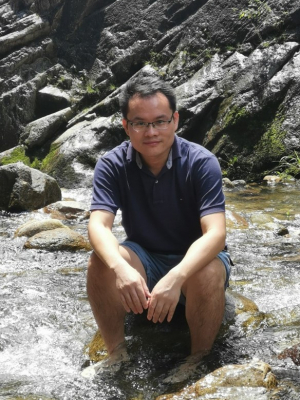
基本情况
汪善全,安徽人,教授,博士生导师
创新研究
通过结合微生物培养、组学分析、分子生物技术开发及新型装备设计运行的交叉研究,以土壤与水环境中卤代有机物(RX)还原脱卤及污染修复、RX元素生物地球化学循环为研究对象,聚焦厌氧微生物还原过程研究与技术开发。代表性科研成果包括:(1)所获得的多氯联苯(PCBs)脱氯菌株及其功能基因信息是该研究领域近30年来的重大突破(Wang et al., PNAS, 2014; Bedard, PNAS, 2014);(2)新代谢途径发现---“硫酸盐异化还原(DSR)产零价态硫(ZVS)”,为厘清生物地球化学循环领域“隐性硫循环(cryptic sulfur cycling)”谜题并认识卤代有机物-硫循环耦合机制提供了理论依据(Wang* et al., PNAS, 2023; Wang* et al., Nat Commun, 2025);(3)解决了卤代烃污染场地生物修复领域两大瓶颈难题---极难培养脱卤菌吨级规模菌剂扩大生产及场地微生境调控,并成功应用于苏州、台州及韶关等地方典型卤代烃污染场地生物修复工程(Wang* et al., ES&T, 2023; Wang* et al., ES&T, 2025)。相关研究成果发表在PNAS、Nature Communications、Global Change Biology、Environmental Science & Technology等重要学术期刊。
欢迎具有环境科学与工程、(分子)微生物学、生物信息学及土壤科学等学科背景的本科生、硕士、博士及博士后等科研人员加入我们课题组!
实验室链接://bcweb168.com/metabiolab/
联系方式
地址:广州市番禺区外环东路132号博彩担保评级网站,5100006
E-mail: [email protected]
教育经历
2008.1-2012.6 新加坡国立大学 博士
2004.9-2007.6 北京师范大学 硕士
2000.9-2004.6 北京科技大学 学士
工作经历
2020.1- 至今 中山大学 教授
2016.1-2019.12 中山大学 副教授
2014.7-2015.12 伊利诺伊大学香槟分校 博士后
2012.7-2014.6 新加坡国立大学 博士后
2012.7-2014.6 新加坡基因研究所 访问博士后
研究方向
卤代有机物微生物还原脱卤及污染修复
厌氧消化微生物组及装备
微生物C-N-S-X(卤)元素循环
代表性论著(//www.researchgate.net/profile/Shanquan_alan_Wang2)
学术论文
Zhou N, Li Q, Liang Z, Yu K, Zhang C, Wang H, Li P, He Z, Wang S*. (2025) Microbially-mediated halogenation and dehalogenation cycling of organohalides in the ocean. Nat Commun. 16(1): 10670.
Xu G, He H, Tang D, Lu Q, Mai B, He Z, Adrian L, He J, Dolfing J, Wang S*. (2025) High-Throughput Screening of Microbial Reductive Dechlorination of Polychlorinated Biphenyls: Patterns in Reactivity and Pathways. Environ Sci Technol. 59(15): 7712-7721.
Lu Q, Liang Q, Wang S*. (2024) Burning question: Rethinking organohalide degradation strategy for bioremediation applications. Microb Biotechnol. 17(8): e14539.
Wang S*†, Lu Q†, Liang Z†, Yu X, Lin M, Mai B, Qiu R, Shu W, He Z, Wall JD. (2023) Generation of zero-valent sulfur from dissimilatory sulfate reduction in sulfate-reducing microorganisms. PNAS. 120(20): e2220725120.
Liang Z, Abdillah A, Fang W, Qiu R, Mai B, He Z, Juneau P, Gomes MP, Priadi CR, Wang S*. (2023) Unique microbiome in organic matter-polluted urban rivers. Glob Chang Biol. 29(2): 391-403.
Wu R, Shen R, Liang Z, Zheng S, Yang Y, Lu Q, Adrian L, Wang S*. (2023) Improve Niche Colonization and Microbial Interactions for Organohalide-Respiring Bacteria Mediated Remediation of Chloroethene Contaminated Sites. Environ Sci Technol. 57(45): 17338-17352.
Wang S*, Wang Y, He X, Lu Q*. (2022) Degradation or humification: rethinking strategies to attenuate organic pollutants. Trends Biotechnol. 40(9):1061-1072.
Lu Q, Liang Y, Fang W, Guan KL, Huang C, Qi X, Liang Z, Zeng Y, Luo X, He Z, Mai B, Wang S*. (2021) Spatial Distribution, Bioconversion and Ecological Risk of PCBs and PBDEs in the Surface Sediment of Contaminated Urban Rivers: A Nationwide Study in China. Environ Sci Technol. 55(14): 9579-9590.
Qiu L, Fang W, He H, Liang Z, Zhan Y, Lu Q, Liang D, He Z, Mai B, Wang S*. (2020) Organohalide-Respiring Bacteria in Polluted Urban Rivers Employ Novel Bifunctional Reductive Dehalogenases to Dechlorinate Polychlorinated Biphenyls and Tetrachloroethene. Environ Sci Technol. 54(14): 8791-8800.
Wang S†, Chng KR†, Wilm A, Zhao S, Yang KL, Nagarajan N*, He J*. (2014) Genomic characterization of three unique Dehalococcoides that respire on persistent polychlorinated biphenyls. PNAS. 111(33): 12103-12108. †These authors contributed equally. (Featured as PNAS cover story, and highlighted in Science Daily, Lianhe Zaobao, Asian Scientist Magazine, Dredgingtoday and BioSpace)
书籍编著
Wang, S., He, J., Shen, C., Manefield, M. J., eds. (2019). Organohalide Respiration: New Findings in Metabolic Mechanisms and Bioremediation Applications. Lausanne: Frontiers Media. doi: 10.3389/978-2-88945-848-6.
教学成果
1.《环境分子微生物学(第二版)》教材(十四五规划教材),汪善全主编,科学出版社,2026.
2.《环境分子微生物学》教材,汪善全主编,科学出版社,2022.
2. Wang S*, Lu H, Zhao C, Juneau P. 2021. A Systematic Approach to Promote Environmental Engineering Students’ Learning in Environmental Molecular Microbiology. J Microbiol Biol Educ. 22: 1-3.